

Upasna Srivastava
PhD Scholar
20 min read
June 26, 2026
What Is Dyslexia?
A neurological variation, not a deficiency
🧠 Neurological Definition
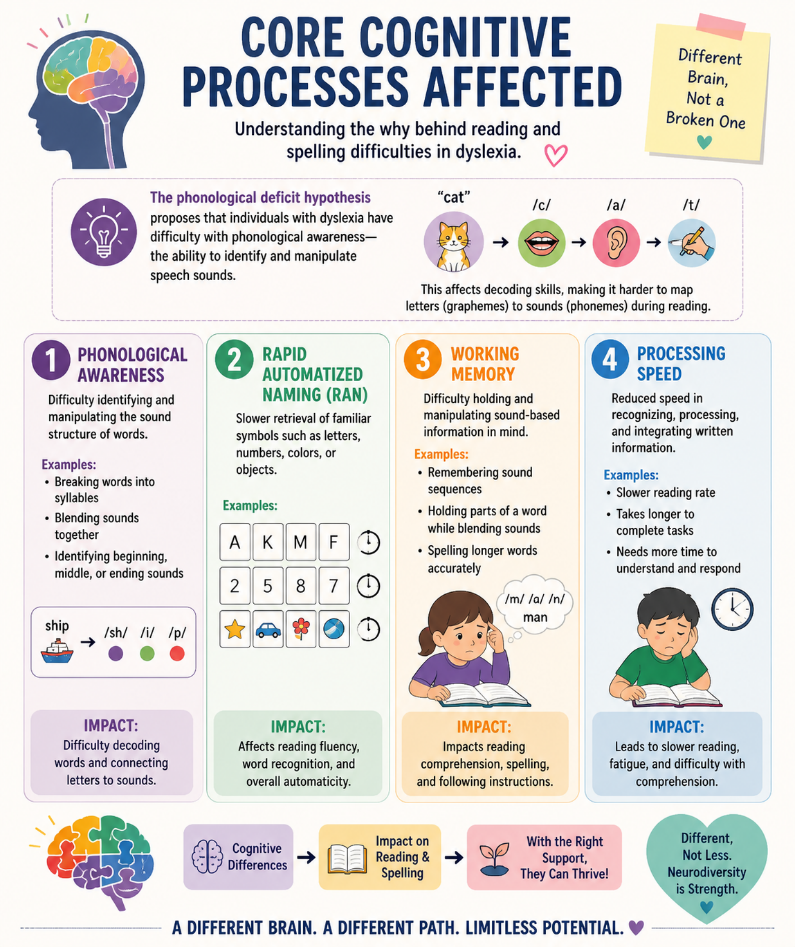
Dyslexia is a specific learning disability of neurological origin. It is characterised by difficulties with accurate and/or fluent word recognition, as well as poor spelling and decoding abilities, resulting from a phonological processing deficit.
🧬 Brain Structure
Neuroimaging (fMRI/PET) shows reduced activation in left posterior brain regions — areas critical for phonological processing. Individuals often develop compensatory right-hemisphere pathways, enhancing visual-spatial skills.
🧬 Genetic Basis
Dyslexia is strongly hereditary with a 40–60% chance of inheritance. Key candidate genes include DCDC2, KIAA0319, and DYX1C1. Prevalence is 15–20% globally — approximately 1 in 5 people.
💡 Cognitive Strengths
Many individuals demonstrate exceptional strengths in visual-spatial reasoning, creative thinking, holistic problem-solving, and big-picture processing. Dyslexia is a different cognitive style, not a deficit.
KEY POINT — Intelligence is Separate
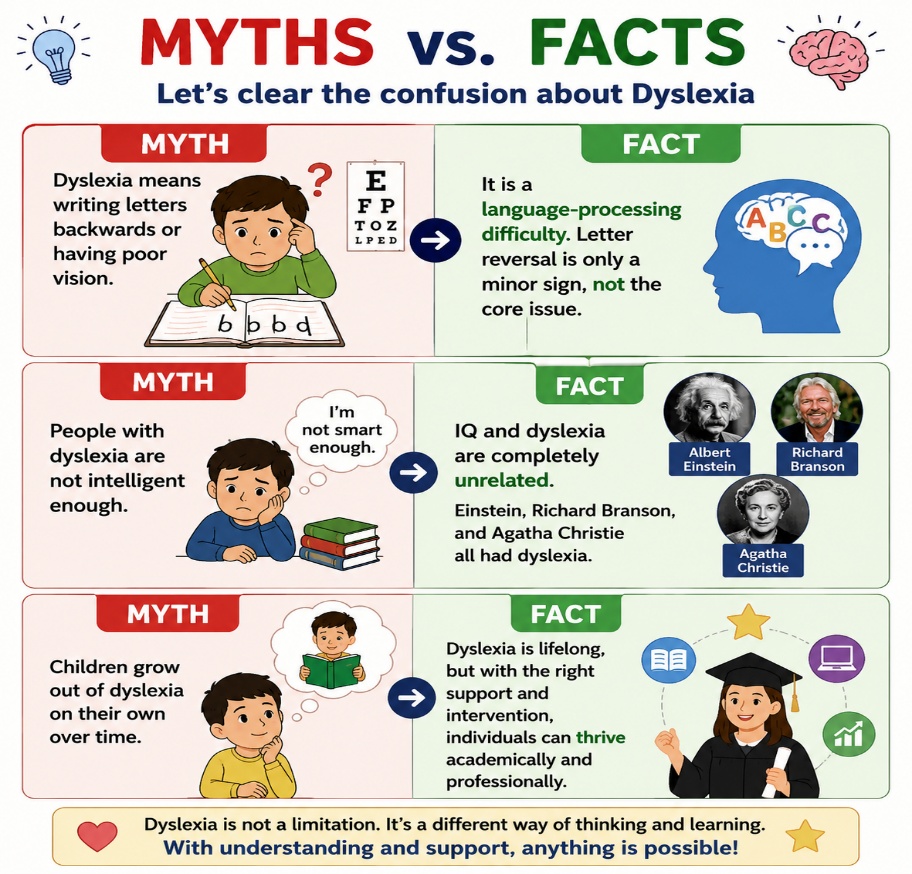
Dyslexia is NOT related to intelligence. IQ and dyslexia are entirely separate. Many highly gifted individuals — including Albert Einstein, Richard Branson, Agatha Christie, and Leonardo da Vinci — had dyslexia.
Myths vs Facts
Signs & Symptoms by Age
The earlier identified, the more effective the intervention
Delayed Speech
Starts talking later than peers and struggles finding words.
Rhyme Difficulty
Difficulty producing or identifying rhyming words.
Letter Name Problems
Difficulty learning alphabet names and sounds.
Pronunciation Issues
Mispronounces familiar words and struggles blending sounds.
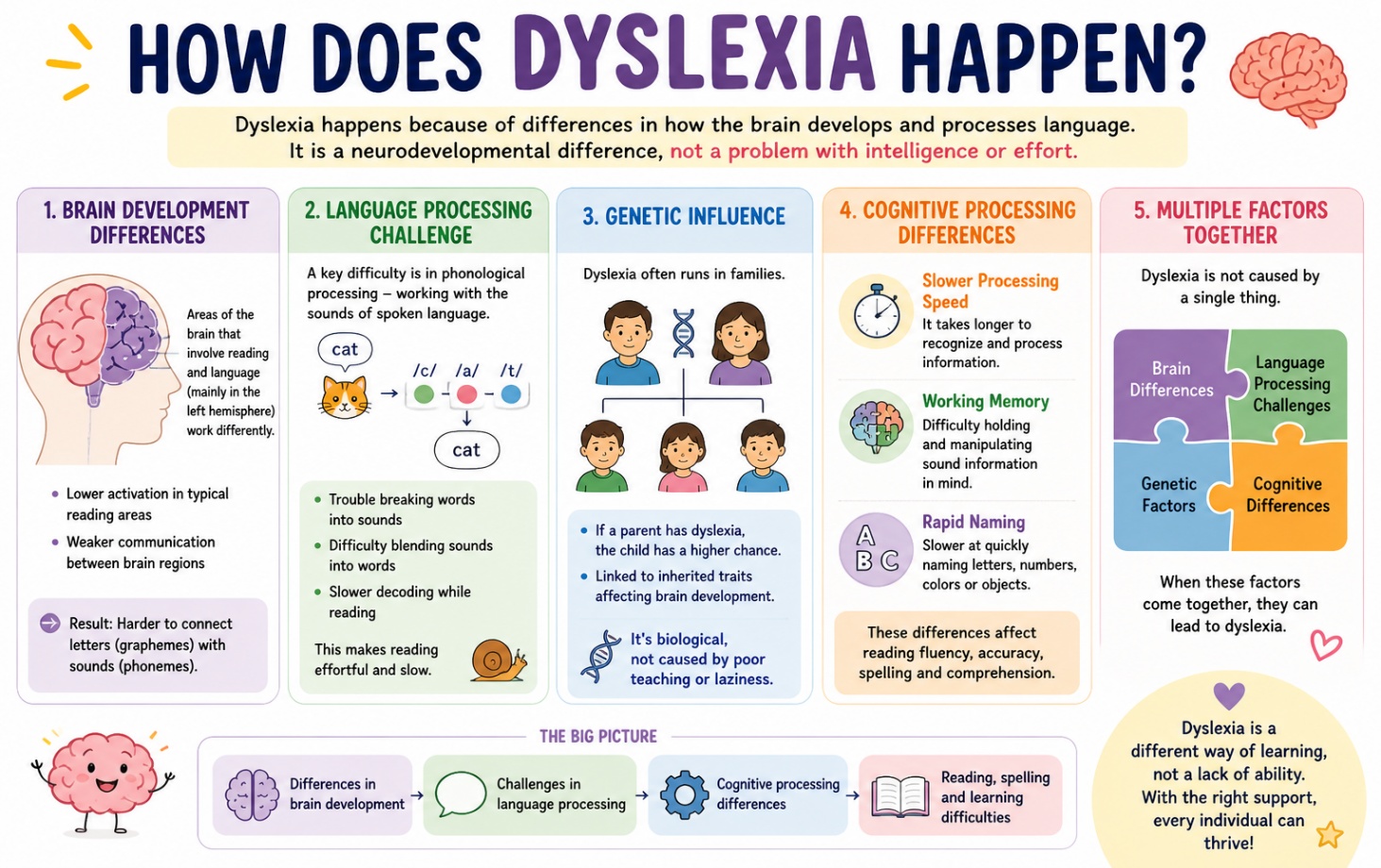
How Does Dyslexia Happen?
Neurological & brain-based causes, not effort or parenting
Neurological & Brain-Based🧠
Differences in left-hemisphere language areas: inferior frontal gyrus
Phonological processing deficit — difficulty breaking words into phonemes
Magnocellular theory — dysfunction in neurons processing rapid visual/auditory signals
Cerebellar deficit theory — impacts automaticity of reading & writing
Neuroimaging (fMRI) shows under-activation of posterior reading circuits
🧬Genetic & Environmental
Strongly hereditary — 40–60% chance if a parent has dyslexia
Linked to chromosomes 1, 2, 3, 6, 7, 11, 15, and 18
Key candidate genes: DCDC2, KIAA0319, and DYX1C1
Premature birth or low birth weight may increase risk
Lack of early language exposure can exacerbate genetic vulnerabilities
Important
Dyslexia is NOT caused by lack of effort, poor parenting, low intelligence, or inadequate schooling. It is a neurobiological condition with a strong genetic basis.
When to Seek Help
Developmental timeline — act early for best outcomes
Early Warning Signs – Act Immediately
If your child shows significant delay in speech, difficulty with nursery rhymes, or persistent trouble recognizing letters, consult a specialist without delay.
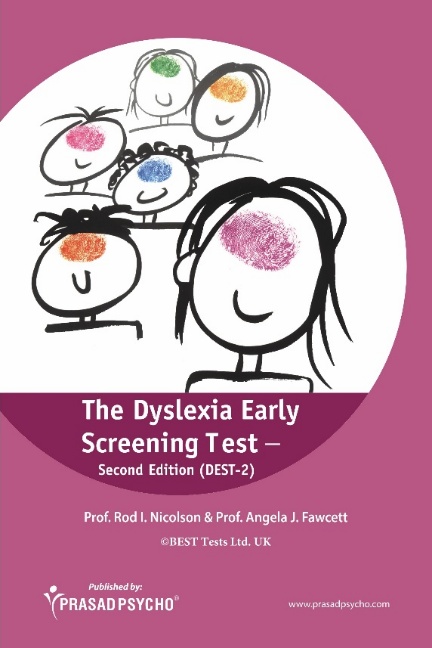
Formal Screening with DEST-2 or DSTJ
When a child shows persistent difficulty with reading, spelling, or phonics despite adequate teaching, use a validated screening tool. The DEST-2 (4–6.5 yrs) and DSTJ (6.5–11 yrs) by Rod Nicolson & Angela Fawcett, from Prasad Psycho Pvt. Ltd., are designed precisely for this group.

In-Depth Diagnosis & School Support Plan
Obtain a formal diagnosis from a qualified Educational Psychologist. Schools should provide extra exam time, assistive technology, specialised literacy support, and an Individual Education Plan (IEP). The DST-S is the recommended tool for secondary-age students.
College & University Accommodations
Use the DAST (Dyslexia Adult Screening Test) to identify previously undiagnosed dyslexia before or during higher education. Universities offer disability services with academic support and exam accommodations.
Workplace Assessment & Life Management
It is never too late to get assessed. Adults can access coaching, assistive technology (text-to-speech, dictation software), and reasonable adjustments at work under the Rights of Persons with Disabilities Act 2016 in India.
Treatment & Management
With the right support, individuals with dyslexia can fully flourish
Structured Literacy Programs
- • Orton–Gillingham (OG) — gold standard, multisensory method
- • Wilson Reading System — phonological structured approach
- • Phonological Awareness Training
- • Multisensory VAKT: Visual, Auditory, Kinaesthetic, Tactile
- • Explicit, systematic phonics instruction
Assistive Technology
- • Text-to-Speech: Read&Write, NaturalReader
- • Speech-to-Text / Voice Dictation tools
- • Dyslexia-friendly fonts
- • Audiobooks and digital reading aids
- • Mind-mapping software
Educational Accommodations
- • Extra exam time (25–50%)
- • Reader and/or scribe support
- • Laptop with spell-check
- • Reduced written homework
- • Alternative formats: oral exams and presentations
Emotional & Psychological Support
- • CBT for associated anxiety and low self-esteem
- • Building self-esteem and resilience coaching
- • Family counselling and parent education workshops
- • Peer support groups and mentoring
- • Strength-based learning — celebrate strengths
Dyslexia Awareness
October is Dyslexia Awareness Month
For Teachers
- ✓Use multisensory teaching (see, hear, touch, do)
- ✓Allow oral responses instead of written work
- ✓Value effort over accuracy
- ✓Avoid reading a struggling student's work aloud
- ✓Complete basic dyslexia awareness training
For Parents
- ✓Read together daily
- ✓Praise effort clearly and specifically
- ✓Seek early screening if difficulties persist
- ✓Connect with support organizations
- ✓Avoid comparisons with peers
For Employers
- ✓Offer flexible deadlines
- ✓Allow assistive tools
- ✓Recognise creativity strengths
- ✓Follow accessibility provisions
For Policymakers
- ✓Mandate teacher training
- ✓Ensure screening tools in schools
- ✓Enforce education provisions
- ✓Fund specialist support
Dyslexia Screening Tests
Clinically validated tools — Published & Distributed by Prasad Psycho Pvt. Ltd.
About the Test Authors
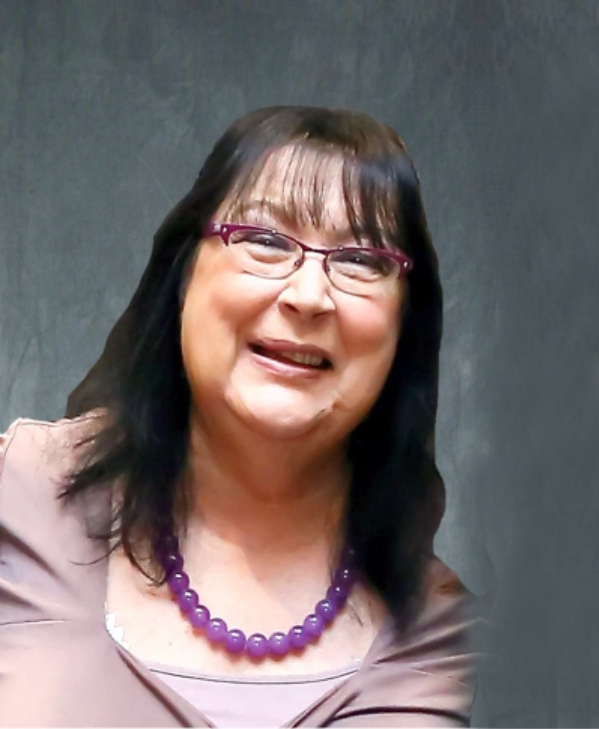
Prof. Angela Fawcett

Prof. Rod Nicolson
Prof. Angela Fawcett, Vice President of the British Dyslexia Association, is globally recognised for her contributions and research in dyslexia. DST assessments have supported more than 2 million children worldwide.
Prof. Rod Nicolson is a leading expert in dyslexia and learning, having co-developed screening tools across age groups and introduced influential theories in educational research over 30+ years.
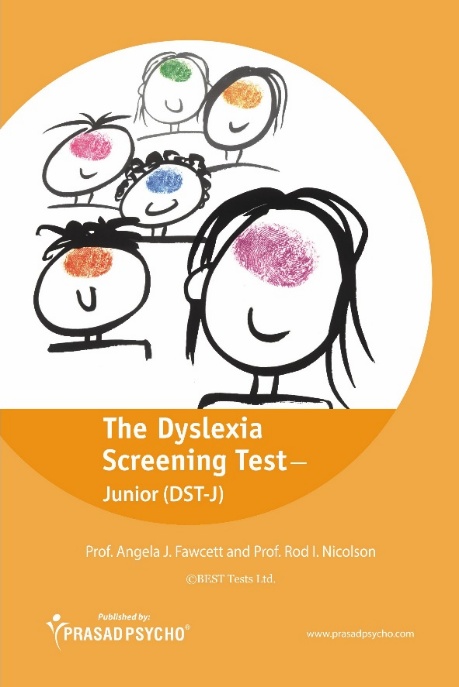
DST-J — Dyslexia Screening Test — Junior
Age: 6 yrs 6 months – 11 yrs 5 monthsTDesigned for primary school-age children, the DSTJ gives a detailed strengths and weaknesses profile across reading, spelling, phonological awareness, and cognitive skills. Essential for planning early support interventions and informing parent and teacher discussions.
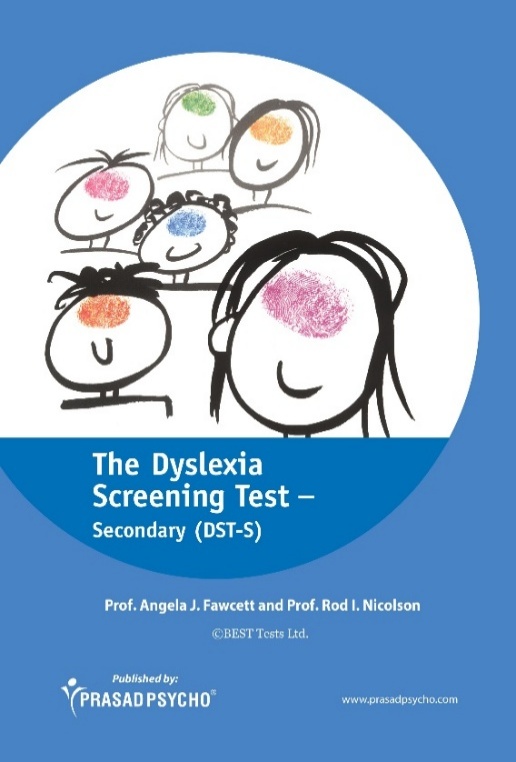
DST-S — Dyslexia Screening Test — Secondary
Age: 11 yrs 6 months – 16 yrs 5 monthsSpecially developed for secondary school students, the DST-S provides a comprehensive screening profile of both risk and protective factors. Helps teachers, SENCOs, and psychologists design targeted intervention. Results support IEP development and exam access arrangements.
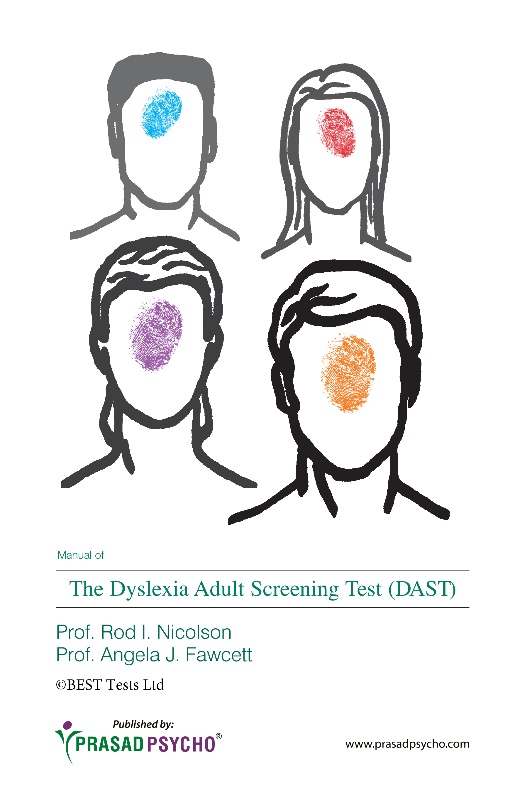
DAST — Dyslexia Adult Screening Test
Age: 16.5 years and aboveA standardised, quick-to-administer screening test designed to identify adults who may have dyslexia. Widely used by universities, employers, HR departments, and psychologists. Provides a comprehensive at-risk quotient (ARQ) to help professionals plan appropriate support.
Dyslexia Early Screening Test 2nd Ed.
Pre-school / Reception — earliest possible detection
Dyslexia Screening Test Junior
Primary school — early intervention planning
Dyslexia Screening Test Secondary
Secondary school — exam access & IEP support
Dyslexia Adult Screening Test
University, workplace, adult diagnosis